Buried Alive: How Critical Business Documents Vanish Inside Your Own Storage System
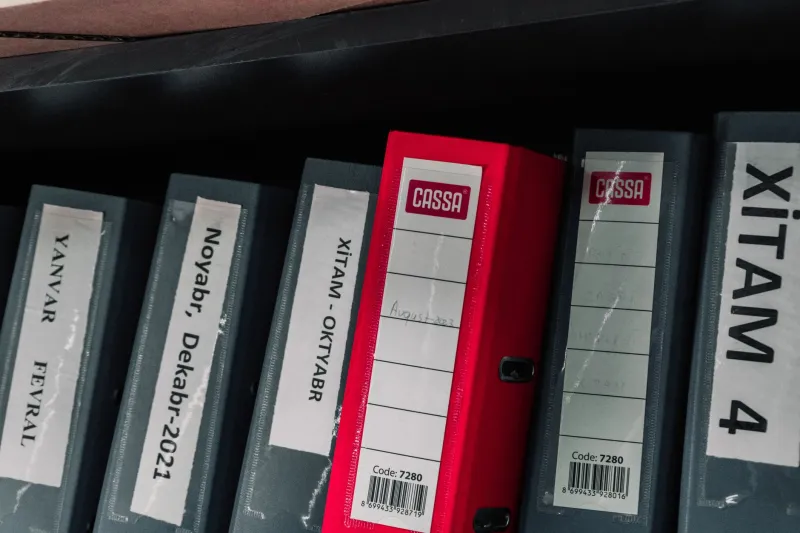
There is a particular frustration that most professionals recognize immediately but rarely discuss out loud: the experience of knowing a file exists, knowing someone on your team created it, and being completely unable to find it. It is not missing. It was never deleted. It is simply buried — somewhere inside a folder structure that has grown, over months or years, into something no one fully understands anymore.
This is not a storage failure. It is a governance failure. And it is costing American businesses far more than they realize.
The Illusion of Organization
Shared drives create a powerful illusion of order. Files are technically stored. Space is technically being used. And yet, when a project manager needs last quarter's vendor contract, or a compliance officer requires the original policy document from eighteen months ago, the search begins — and often ends — in frustration.
The problem typically originates not from carelessness but from the absence of a shared organizational standard. One team member creates a folder called "Contracts - 2024." Another saves a related document under "Legal > Vendor Agreements > Active." A third uploads a revised version directly to the project root with a filename like "final_FINAL_v3_USE THIS ONE.docx." All three files are technically accessible. None of them are reliably findable by anyone other than the person who created them.
Multiply this pattern across a team of fifteen, a department of sixty, or an enterprise of several hundred, and the result is a shared drive that functions more like a digital landfill than a knowledge repository.
Why Naming Conventions Fail Without Enforcement
Most organizations that have experienced this problem have, at some point, attempted to address it with a naming convention policy. These policies are well-meaning and frequently ignored. The reason is structural rather than behavioral: without a system that enforces or at minimum encourages consistent naming at the point of upload, individual contributors will default to whatever feels natural in the moment.
Effective file naming conventions require three things that most informal policies lack. First, they must be specific enough to be applied consistently — generic guidance like "use descriptive names" produces exactly the kind of variation that creates search problems. Second, they must be embedded into the upload or save workflow rather than existing as a separate document that employees are expected to consult. Third, they must include date formats, version indicators, and project or department identifiers that allow files to be sorted and filtered without manual review.
A filename like "2025-03_ContractReview_AcmeCorp_v2_DRAFT.pdf" communicates substantially more than "acme contract march.pdf" — and that difference compounds dramatically at scale.
The Folder Depth Problem
Nested folder structures are among the most common sources of document loss in shared environments. The deeper a file is buried within a hierarchy, the less likely it is to be discovered by anyone who did not personally create that folder path. Research consistently shows that users abandon search efforts after failing to locate a file within the first few attempts — meaning that files stored beyond three or four folder levels deep are, for practical purposes, inaccessible to most of the team.
The temptation to create subfolders is understandable. Granularity feels like precision. But granularity without a governing logic produces a labyrinth. A folder called "Projects > Q1 > Client Work > Active > Reviewed > Final > Approved" does not describe a location. It describes a history — and histories are not navigable without context.
The more sustainable approach is a shallow, broad hierarchy supplemented by robust tagging and metadata. Files should be findable through search, not through navigation. The folder structure should serve as a general orientation, not the primary retrieval mechanism.
Metadata Is Not Optional
One of the most underutilized capabilities in modern cloud storage platforms is structured metadata — the ability to attach searchable attributes to a file beyond its name and location. Tags indicating document type, associated project, responsible department, review status, and expiration date transform a static file into a queryable record.
Without metadata, search functionality is limited to filename matching, which is only as reliable as the naming conventions your team actually follows. With metadata, a compliance officer can surface every policy document tagged for annual review. A sales director can retrieve all proposals associated with a specific client. An operations team can identify every vendor agreement scheduled to expire within the next ninety days — without opening a single folder.
Implementing a metadata framework does require upfront investment. Document types must be defined. Tag vocabularies must be standardized. Upload workflows must be structured to prompt contributors to apply relevant attributes. But the return on that investment is immediate and measurable: files that were previously lost become reliably discoverable, and institutional knowledge stops evaporating every time an employee changes roles or leaves the organization.
Version Control as a Findability Tool
Document versioning is most commonly discussed in the context of accuracy — ensuring that teams are working from the most current iteration of a file. But version control also plays a significant role in discoverability. When multiple versions of a document exist without a clear lineage, contributors frequently create duplicate files rather than updating existing ones, compounding the folder clutter problem and fragmenting the document's history across multiple locations.
A storage environment with structured version control eliminates the need for filename-based versioning (the "v2," "v3," "FINAL" suffixes that signal a broken process). The platform maintains the history automatically. Contributors always access a single canonical file, and previous iterations remain retrievable through the version log rather than as separate documents occupying separate folders.
This is not merely a convenience feature. For organizations subject to regulatory requirements — including industries governed by HIPAA, SOX, or state-level data privacy statutes — the ability to produce a complete and auditable document history is a compliance necessity, not an operational preference.
Building a Framework That Gets Used
The most sophisticated document governance policy is worthless if it creates enough friction that contributors route around it. Adoption depends on the system being easier to use correctly than incorrectly. That means the platform itself must do a portion of the organizational work.
Practical implementations typically include upload prompts that require contributors to select a document type and apply at least one project tag before saving. They include folder templates that establish the correct hierarchy at project initiation rather than allowing it to evolve organically. They include periodic audits — automated where possible — that flag files without required metadata or files that have not been accessed in a defined period.
Perhaps most importantly, they include clear ownership. Every document should have an identifiable owner responsible for its accuracy, versioning, and eventual archival or deletion. Shared drives without ownership structures are shared drives without accountability, and accountability is the foundation on which every other governance measure depends.
The Cost of Letting It Continue
Organizations that delay addressing document discoverability tend to do so because the problem feels manageable — a minor inefficiency, a minor annoyance. But the costs accumulate quietly. Time spent searching for files is time not spent on the work those files are meant to support. Decisions made without access to the correct document are decisions made on incomplete information. Compliance audits that require rapid document retrieval expose the full depth of the problem at the worst possible moment.
A centralized, well-governed file storage environment does not merely make documents easier to find. It makes the organization's collective knowledge usable — accessible to the people who need it, at the moment they need it, without requiring institutional memory or personal relationships with whoever happened to create the file in question.
That is not a technology problem. It is an organizational discipline problem. And the good news is that the right platform, combined with the right framework, makes that discipline significantly easier to maintain.